The Basic Wardrobe for Women: What to Own in 2026 (and What to Skip)
The numbered capsule is quietly going out of fashion. Here is what a basic wardrobe for women looks like now — built from what you actually wear, not from someone else's checklist.
Affiliate disclosure: this article contains affiliate links. If you buy through them, we may earn a commission at no extra cost to you — it funds our testing. Learn more.
A full closet and nothing to wear is rarely a shopping problem. It is an editing problem — and the style conversation has finally caught up to that.
The numbered capsule had a long run. Thirty-three pieces, colour-coded grids, a spreadsheet for your sweaters. It was useful discipline for a while, but it asked the wrong question: how few can I own? The more interesting question is how often will I actually wear this?
A basic wardrobe for women, done well, is smaller than a department store and looser than a rulebook. It starts with whatever you already reach for on a Tuesday morning and builds outward from there.
Here is how we would approach it from the ground up: the difference between a basic and an essential, how many of each piece you genuinely need, where quality is worth paying for, and the handful of fit details that decide whether something gets worn or quietly abandoned at the back of the rail.
What a Basic Wardrobe for Women Actually Means
A basic wardrobe is a short, deliberate set of garments that combine into most of the outfits your life requires. Not every outfit. Most. The test is not whether a piece is classic in the abstract — it is whether it shows up in rotation.
Which makes a basic wardrobe personal by definition. Two women can own completely different clothes and both have excellent, functional closets, simply because they spend their weeks differently. A hospital consultant, a freelance designer and a retired teacher do not need the same ten pieces, no matter how often the same ten pieces get published.
Basics are categories. Essentials are habits.
The Well Dressed Life draws a distinction worth borrowing: basics are category items — the white tee, the black trouser, the denim jacket — while essentials are usage-based, meaning the specific pieces you genuinely wear most. A white tee is only an essential if you reach for it. If you live in button-downs or ribbed tanks, the tee is a basic you happen to own.
This is why so many carefully assembled wardrobes still feel wrong. They are full of correct answers to someone else’s life.
- Basic: a white cotton crew tee. Essential: the ribbed tank you wear under everything three days a week.
- Basic: a sharp black blazer. Essential: the soft unstructured jacket you grab for the school run and video calls alike.
- Basic: court heels. Essential: the loafers you wear from the station to the office without thinking about it.
- Basic: a trench coat. Essential: the quilted jacket that copes with your actual commute and your actual weather.
The 2026 Shift: Fewer Rules, More Repetition
The mood right now is less about acquiring and more about repeating. Uniform dressing, outfit formulas, the same three combinations worn on a loop and photographed without apology — that is where the energy is. Owning fewer things has stopped being a challenge you complete and started being a default.
The practical consequence is that weight and construction matter more than variety. If a knit is going to appear twice a week from October to March, it needs to survive the washing machine with its shape intact. Mainstream Boutique makes the same point from the shop floor: investing in genuinely good everyday pieces produces dozens of outfits without overfilling a closet.
It also changes how trends fit in. When the foundation is solid, seasonal interest arrives through a shoe, a belt, a sleeve shape or a colour — not through a wholesale wardrobe rebuild. If you want to see what that looks like in practice, our autumn trend report is built around pieces that layer over basics you already have.
How to Build a Basic Wardrobe for Women in Five Steps
No shopping yet. The first three steps cost nothing.
1. Audit the last three weeks, not the last three years
Pull out everything you have genuinely worn in the past month and lay it on the bed. That pile is your real wardrobe. Everything still hanging up is either seasonal, aspirational or dead weight, and you now have the evidence to tell which.
- Which three pieces appear most often? Those are your true essentials.
- What did you wear when you needed to look competent at short notice?
- What did you reach for when you felt tired, bloated or rushed? That garment is doing enormous emotional work and probably needs a backup.
- What have you not touched in a year, despite liking it? Note why: fit, fabric, fuss, or nothing to wear it with.
That last answer is the useful one. A piece you like but never wear is usually missing a partner, not missing merit.
2. Match the wardrobe to your week, not your fantasy
Most wardrobe frustration comes from dressing for a life you had five years ago, or one you hope to have later. Write down how many days a week you actually spend in each mode, then weight your buying accordingly.
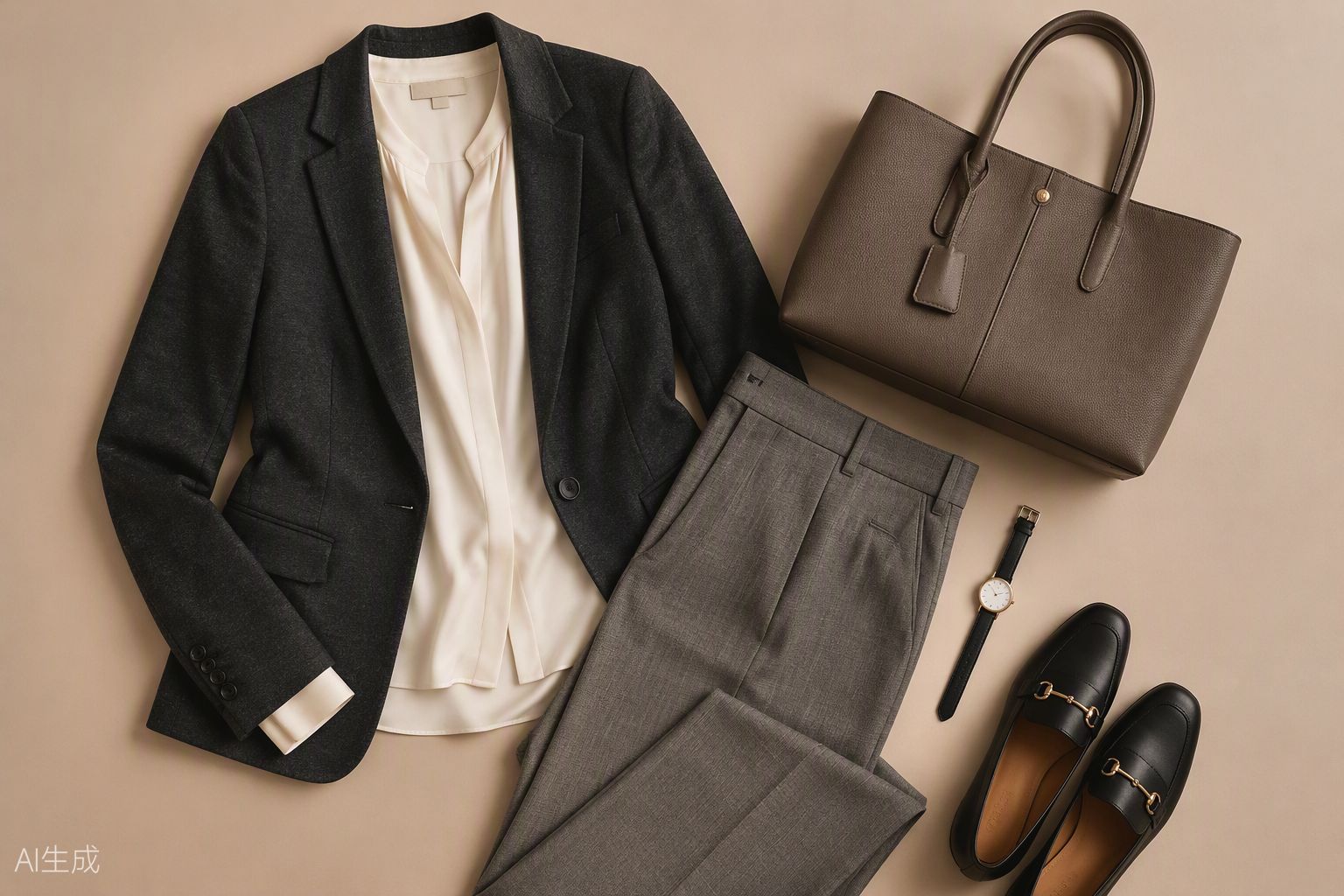
- Corporate or client-facing: a tailored blazer or a sharp dress, slim trousers, and shoes you can genuinely walk in. Our work capsule guide goes deeper here.
- Hybrid or work-from-home: elevated joggers or wide-leg knit trousers, updated denim, layering tees, and knits that are soft but hold structure on camera.
- Creative or casual: dark denim, one strong jacket, clean sneakers, oversized button-downs worn open over everything.
- Active or retired: comfortable bottoms in good fabric, easy dresses, and supportive shoes that do not look orthopaedic.
If you are navigating a dress code that nobody has ever defined out loud, our business casual breakdown translates it into actual garments.
3. Set your quantities with laundry maths
Here is the step almost every essentials list skips, and the one that quietly determines whether your wardrobe functions: nobody tells you how many. The answer is not a round number someone picked. It is arithmetic.
Multiply how many times a week you wear a category by the length of your laundry cycle in weeks, then add one for the piece in the wash or at the dry cleaner.
Wear a tee four times a week and run laundry every ten days? Four multiplied by 1.4 is roughly six, plus one, so seven tees. Wear a blazer twice a week and dry-clean seasonally? Two will do. Wear heels once a month? One pair is plenty, and the second pair you were about to buy is not a basic — it is a hobby.
This reframes the whole exercise. A “minimal” wardrobe with one good tee is not minimal, it is broken; you will panic-buy a bad replacement by week three. Meanwhile the eleven cardigans you own for a twice-monthly habit are the actual excess. Depth where you repeat, restraint where you do not.
4. Build outfits, not items
The single most effective filter at the point of purchase is to stop evaluating the garment and start evaluating the outfit it joins. Three questions, borrowed and sharpened:
- Can I wear this at least three different ways?
- Does it work with what is already in my closet, including shoes?
- Would I wear it this week — not next season, not when the weather turns, this week?
If the honest answer to the third question is no, the piece is a want. Wants are allowed. They just should not be funded out of the essentials budget. A written wardrobe checklist helps enormously in a fitting room, where judgement goes soft.
5. Only keep what you love before you leave the shop
If it feels merely fine under fitting-room lighting, it will feel worse at 7:40am on a Monday. Ambivalence does not improve with ownership. The pieces that get worn into the ground are the ones that felt easy, confident and put-together without effort from the first minute.
The Pieces That Earn Their Keep
With all of that in place, here is the shortlist we would work from. Treat it as a menu, not a mandate — pick the version of each category that matches your week.
Tops
- A tee in a weighty cotton that holds its shape after washing — in whichever neckline you genuinely wear.
- Two or three layering tanks and long-sleeves, in colours that disappear under everything.
- One crisp button-down, sized to work both tucked and worn open as a layer.
- A fine-gauge knit that fits under a jacket without bunching at the sleeve.
- One substantial knit in merino or cashmere for the months when it becomes the whole outfit.
Bottoms
- Denim in your most-worn silhouette, in a dark or mid rinse that reads tidy with a blazer.
- A second denim shape for contrast — if the first is straight, make the second wide or barrel.
- Tailored trousers that take both a flat and a heel. Hem them. Non-negotiable.
- One skirt or one pair of easy warm-weather trousers, depending on your climate and comfort.
Layers and outerwear
- A blazer: structured if you present to people, unstructured if you do not.
- A casual jacket with personality — denim, leather, suede or tweed. One, not four.
- A proper coat for your real weather, in a neutral that works over 80 percent of your wardrobe.
- A cardigan or overshirt that functions as indoor outerwear on cold office days.
Dresses
One dress that solves a problem is worth five that create them. The brief: it works with flats and with heels, it takes a blazer or a knit over the top, and it needs no special underwear. That dress will quietly handle a funeral, a dinner, a presentation and a heatwave.
Shoes, bags and the small things
- Clean, comfortable sneakers you would wear to lunch, not just to the gym.
- A flat you can walk distances in — loafers, ballet flats or ankle boots, whichever suits your climate.
- One pair of boots for cold months, in a heel height you will genuinely wear.
- A crossbody or small shoulder bag for daily use, and a tote that holds a laptop.
- A belt, a scarf, sunglasses, and two or three pieces of jewellery you never take off.
Where to Invest and Where to Save
Quality is not evenly distributed in its usefulness. Spend where construction is visible and wear is heavy; save where fit is forgiving and fashion moves fast. The rough rule: anything tailored, anything that touches weather, and anything you wear more than twice a week deserves the better version.
| Product | Price | Rating | Best for | |
|---|---|---|---|---|
| Quince Quince Mongolian Cashmere Crewneck Sweater | See retailer | — | See guide | View |
| Uniqlo Uniqlo Supima Cotton Crew Neck T-Shirt | See retailer | — | See guide | View |
| Levi's Levi's Ribcage Straight Ankle Jean | See retailer | — | See guide | View |
| COS COS Wool-Blend Tailored Blazer | See retailer | — | See guide | View |
| Everlane Everlane Day Loafer | See retailer | — | See guide | View |
| Marks Marks & Spencer Longline Quilted Coat | See retailer | — | See guide | View |
Check the retailer page for current prices and customer reviews.
One caveat: price is a weak proxy for durability. Read the composition label and check the seams before you read the tag. A dense mid-market wool coat will outlast a thin designer one, and a well-cut high-street trouser that fits beats expensive tailoring that does not.
Fit and Fabric: The Quiet Deciders
Almost every unworn garment in a closet failed on one of two counts. It did not fit properly, or it did not feel good against the skin. Both are checkable before you buy.
Three fit checks before you commit
- Raise both arms above your head. If the whole garment lifts with you, the armhole is wrong and you will spend the day tugging.
- Sit down. Check the waistband, the thigh and the hem. Most trousers are judged standing and worn sitting.
- Check the shoulder seam on anything structured. It should sit at the edge of your shoulder. That seam is the one alteration that is expensive to fix and the one that makes cheap clothes look expensive when it lands correctly.
Build a tailoring line into your clothing budget. Hemming trousers and taking in a waistband costs a fraction of a new garment and converts a near-miss into a favourite.
Fabric labels worth reading
For repeat-wear pieces, look for heavier cottons, merino, wool blends and dense knits. Be wary of anything so thin it needs a layer underneath to be decent, and of high elastane content in trousers you want to keep for years — stretch fibres are the first thing to go slack. Lining in a jacket or skirt is usually a sign someone cared.
Colour: Let the Palette Do the Work
A basic wardrobe does not have to be beige, but it does have to be coherent. The reason capsule wardrobes photograph well is not minimalism; it is that every piece shares a temperature, so items combine without negotiation.
Pick two neutrals as your base — navy and cream, black and grey, chocolate and camel — then add two or three colours you genuinely like on your face. Keep the loud, specific, seasonal shades for tops and accessories, where they are cheap to replace and sit near your face anyway. Our guide to choosing a capsule wardrobe colour palette walks through how to pick a base you will not get bored of.
Five Mistakes That Keep a Wardrobe Stuck
- Buying the list instead of the life. If a numbered checklist tells you to own a trench and you live in a car, skip the trench.
- Owning one of everything and three of nothing. Depth matters in the categories you repeat; see the laundry maths above.
- Treating basics as boring and therefore cheap. The pieces you wear most should be the best-made things you own.
- Collecting orphans. A beautiful top that works with nothing you own is not a wardrobe addition, it is a future errand.
- Shopping to fix a mood. The outfit you cannot assemble at 8am is usually missing one specific, unexciting item, and that item is rarely the thing you want to buy.
The Order We Would Buy In
If you are rebuilding from close to scratch, sequence matters. Buy in this order and each purchase makes the previous one more useful.
- Denim that fits your body today, not your body last year.
- The flat shoe you will wear most days.
- Enough of your most-repeated top to survive your laundry cycle.
- Tailored trousers, hemmed.
- One blazer or jacket in your base neutral.
- The substantial knit.
- The one dress that does several jobs.
- The coat, bought at the end of the season if you can wait.
Making It Yours
The goal was never a perfect wardrobe. It is a functional one — a closet where the first thing you grab is already right, and where getting dressed takes four minutes instead of twenty-five.
Start with the audit. Do the laundry maths. Buy slowly, in order, and give yourself permission to own fewer categories but more of the pieces you genuinely live in. A basic wardrobe for women is not a uniform handed down from a magazine. It is the shortest possible list of clothes that makes your actual week easier.
Common questions
Frequently Asked Questions
Sources
Written by
Emma Carter
Editor-in-Chief
Emma spent a decade styling editorial shoots in New York and London before founding Pearlthread. She believes great style is a system, not a shopping habit — and that the best outfit is the one you don't have to think about.
- ✓ 10+ years in fashion editorial (NY & London)
- ✓ Certified image consultant, AICI
- ✓ Personally road-tests every reviewed product for 2+ weeks
Enjoying this guide?
Get the next one in your inbox on Sunday.
Newsletter sign-ups are not available yet.
Keep reading
Related guides
Capsule · Trend Report
The Complete Guide to Building Your Capsule Wardrobe Color Palette
A well-chosen color palette is the secret to a capsule wardrobe that actually works. Here's how to select colors that complement each other, flatter your skin tone, and multiply your outfit options.
12 min read
Capsule · Shopping Guide
The Ultimate Capsule Wardrobe Checklist for Every Season
Everything you need to build a capsule wardrobe checklist that fits your real life, from the 3-3-3 rule to a full seasonal shopping list.
7 min read
Capsule · Trend Report
How to Build a Work Capsule Wardrobe That Actually Works
Building a work capsule wardrobe transforms your morning routine and sharpens your professional presence. Here's how to curate versatile pieces that work together seamlessly.
11 min read
Workwear · Shopping Guide
Business Casual for Women: The Complete 2026 Guide
Business casual is the dress code nobody defines and everybody enforces. Here's the actual rulebook for 2026 — plus the 12 pieces that cover every office.
10 min read